
Hands-Free Upper Back Care: Optimal Massager Positioning for Shoulder Blades
Myth: Leaning heavily against a massager directly over your shoulder blades breaks up deep muscle knots faster.
Reality: Positioning 6D shiatsu nodes over soft muscle tissue—specifically the rhomboid bellies nestled between your spine and the medial scapular border—releases upper back tightness safely without bruising bone. Secure the wireless back buckle snugly across your mid-chest or upper torso to maintain stable hands-free alignment while seated, standing, or relaxing.
Anatomical Mapping: Rhomboids vs. Scapular Spine
To achieve maximum myofascial release without causing periosteal (bone) soreness, you must distinguish between soft muscle bellies and bony landmarks. Placing rotating nodes against bone reduces massage efficiency and can cause localized bruising.
Positioning Adjustments for Sitting, Standing, and Reclining
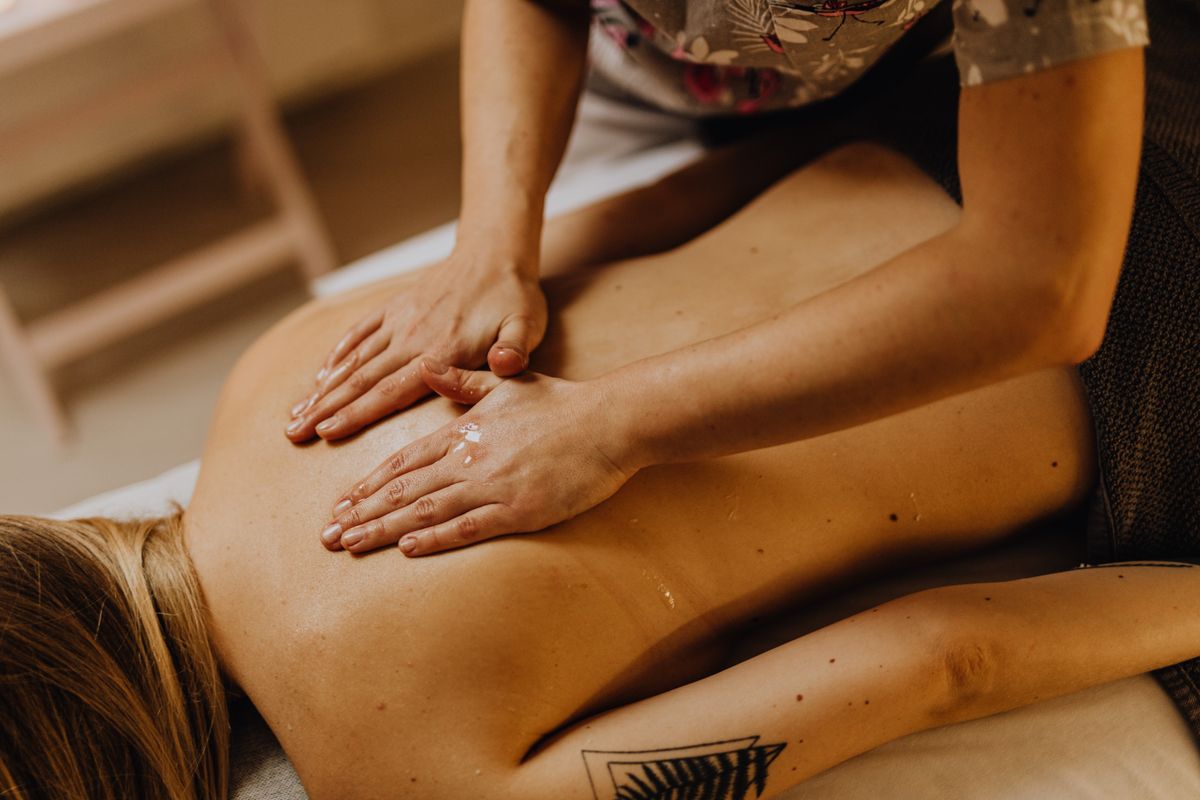
Photo by https://kaboompics.com/ on Pexels
Seated Upright at a Desk (Active Working) — Secure the wireless back buckle around your mid-chest just below the armpits. Tighten the strap until the upper 6D nodes rest firmly against the rhomboid trough between your spine and scapula. Keep your feet flat on the floor and elbows at 90 degrees to maintain natural thoracic extension.
Standing or Walking (Hands-Free Household Tasks) — Fasten the back buckle slightly higher across the upper sternum to prevent downward gravitational drift. Increase strap tension by one notch. The hands-free harness anchors the 6D nodes against the upper trapezius and levator scapulae without requiring manual pulling on arm straps.
Resting in an Armchair or Sofa (Relaxation Mode) — Unbuckle the chest harness or keep it loose. Rest your back gently against the chair cushion, using soft static contact to push the nodes into the rhomboids. Avoid full body-weight recline, which over-compresses internal motor gears and applies excessive mechanical force to soft tissue.
Your body posture dramatically shifts muscle contour and massager placement stability. Adapt your strap tension and node placement based on your active scenario.
Troubleshooting Slipped Massagers and Scapular Digging
| Symptom / Usage Scenario | Root Cause | Immediate Corrective Action | | --- | --- | --- | | Massager slides down toward the lumbar spine during upright desk work | Wireless back buckle is buckled too low around the abdomen or strap tension is insufficient | Unbuckle strap, elevate the main U-shaped massager core higher onto the upper back, and buckle across the mid-chest just beneath the armpits. Cinch the adjustment tab tight. | | Sharp, pinching pain directly on top of the shoulder blade bone | Massage nodes are overriding the hard scapular spine or lateral scapular border | Pause the cycle. Shift the main unit 1 to 2 inches inward toward the spinal column so the rotating 6D nodes nestle into the muscular rhomboid valley. | | Motor slows down, stutters, or makes high-pitched straining noise | Excessive external force from leaning full body weight back against a couch cushion | Sit forward slightly to reduce pressure. Allow the internal motor and strap tension to dictate kneading depth rather than external body weight. | | Massager pulls the head and neck forward into a hunching posture | Strap tension is pulling too low while massager is placed too high on the upper cervical spine | Lower the top nodes to rest below the C7 vertebrae landmark (the prominent bump at the base of your neck) and open your shoulders. |
If your massager shifts out of position or creates sharp discomfort against your shoulder blades, use these scenario-based adjustments to restore proper alignment.
5 Upper Back Positioning Errors to Avoid Immediately
Avoiding these critical placement errors protects your skeletal frame, prolongs motor life, and ensures consistent myofascial trigger point release.
Step-by-Step Hands-Free Buckle Setup Gallery
Follow this visual setup sequence to achieve a rock-solid hands-free fit that targets upper back tightness without manual holding.
Key Placement Rules for Upper Back Relief
Keep these essential rules in mind whenever setting up your cordless massager for interscapular tightness.
Pre-Massage Hands-Free Buckle & Alignment Checklist
- [ ] Locate the inner border of your shoulder blade using your thumb to identify soft muscle tissue.
- [ ] Position upper massager nodes below the C7 vertebrae and medial to the scapular border.
- [ ] Wrap the wireless back buckle strap across your mid-chest or upper torso.
- [ ] Click the buckle shut and pull the adjustment tab until the unit feels secure without constricting breathing.
- [ ] Ensure no hard nodes press directly onto the raised scapular spine or spinal bones.
- [ ] Start with low rotation speed and optional mild heat before increasing intensity.
Fabric & Strap Maintenance Schedule
- After Every Sweaty Session — Wipe down outer synthetic leather and inner mesh fabric with a slightly damp microfiber cloth. Allow to air dry completely before storing.
- Weekly — Inspect the wireless back buckle clip and adjustment webbing for lint, wear, or slack. Wipe mesh with mild soapy water (do not submerge unit).
- Monthly — Check USB-C charging port for dust accumulation. Charge battery fully before long-term storage to maintain lithium-ion cell longevity.
Node Alignment Matrix: 6D Kneading vs. Standard 3D Nodes

Photo by Kindel Media on Pexels
| Anatomical Scenario | Standard 3D Flat Nodes | MASGRE 6D Kneading Technology | Practical User Outcome | | --- | --- | --- | --- | | Rhomboid Trough (Between Spine & Scapula) | Rotates in fixed 2D circular planes; bridging over the depression and missing deep knots | Grasps and extends vertically into the interscapular trough with dynamic 6-node articulation | Reaches deep myofascial trigger points without needing extra manual pressure | | Scapular Border Contour Transition | Bumps harshly against raised bony ridges when transitioning across muscle edges | Flexible node spring arrangement flexes slightly over bone while maintaining continuous muscle contact | Prevents sharp bone pain while smoothly tracing shoulder blade contours | | Trapezius Elevation (Top of Shoulders) | Pushes downward only, flattening muscle bellies without lifting or pinching | Simulates human hand mechanics by lifting and squeezing upper trapezius fibers | Relieves posture-induced shoulder hitching and tension headaches faster |
Reaching deep tissue knots around curved anatomical structures like the scapula requires dynamic node geometry.
Physical Therapist Advice on Scapular Retraction
Integrating active movement with passive shiatsu kneading accelerates muscle knot breakdown and improves posture.
Explore Related Upper Back & Shoulder Care Guides
Expand your home recovery routine with these expert guides on posture care and deep tissue therapy:
- Heated Shiatsu Therapy for Upper Back and Shoulder Stiffness: FAQs
- How to Relieve Tech Neck and Trapezius Strain Using a Cordless Massager
- How to Relieve Lower Back Stiffness Using 6D Shiatsu and Heat Therapy
Frequently Asked Questions About Upper Back Massager Placement
Clear answers to common operational and positioning questions.
Recommended Hands-Free Massagers for Scapular Relief
The top-rated solution engineered specifically for hands-free shoulder blade and upper back myofascial release.
Immediate Posture and Relief Action Plan
Your decision: Identify your specific pain area (rhomboids vs. upper traps) and set up the massager away from bony points.
Do this next: Attach the wireless back buckle across your mid-chest, power on 6D kneading at low intensity, and adjust tension until nodes nestle into the muscle trough between the spine and scapula.
- Read next: Heated Shiatsu Therapy for Upper Back and Shoulder Stiffness: FAQs
- Read next: How to Relieve Tech Neck and Trapezius Strain Using a Cordless Massager
MASGRE Cordless Neck and Upper Back Massager with 6D Kneading & Wireless Back Buckle
Take these immediate steps to position your massager correctly and release persistent upper back knots today.
Cover photo by Gustavo Fring on Pexels.