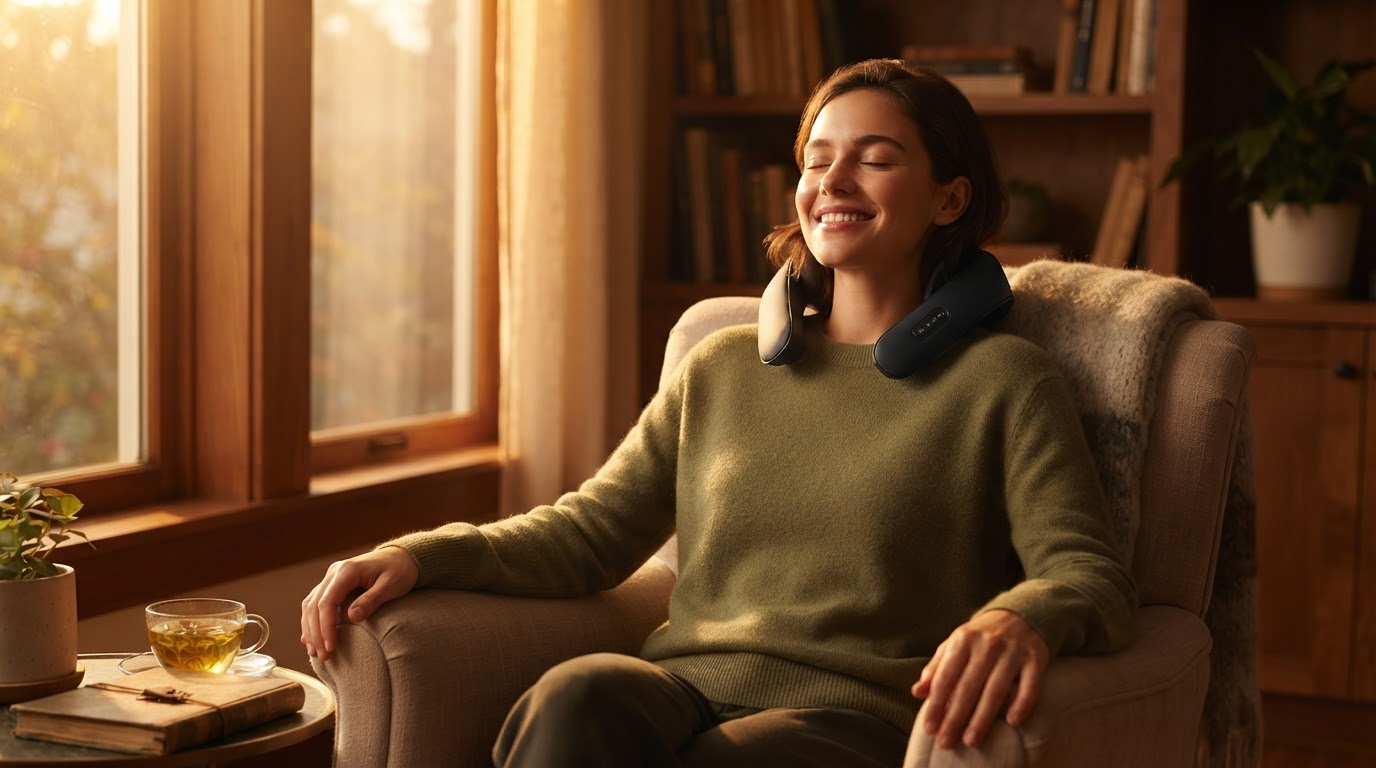
Mastering Deep Tissue Relief with a Cordless Neck Massager
November 9, 2026. This guide explores the mechanics of applying deep tissue pressure to cervical muscles using portable technology. It is written for office workers, frequent travelers, and individuals managing chronic muscle tension who require effective home-based recovery tools.
The Challenge of Cervical Muscle Tension
Persistent neck stiffness often originates in the deeper layers of muscle tissue, specifically the levator scapulae and the upper trapezius. When these muscles remain in a state of contraction due to poor posture or stress, they develop trigger points that standard light-pressure massage rarely resolves. According to Healthline, self-massage techniques using tools like a tennis ball or foam roller can be a first step to easing this pain, but these manual methods often lack the consistency and ergonomic reach required for the complex curves of the neck and shoulders. The primary difficulty lies in the angle of application; it is physically taxing to apply sufficient pressure to your own neck without straining the very muscles you are trying to relax. Many people find that manual kneading leads to hand fatigue long before the deep tissue knots actually release. Furthermore, the localized nature of the pain often requires a sustained, rhythmic pressure that mimic's a therapist's thumbs—a feat difficult to achieve with basic household items. Without the right mechanical advantage, most at-home attempts only address superficial skin and fascia rather than the underlying muscle fibers causing the discomfort.
Implementing the Cordless Neck Massager Solution
To effectively target these deeper layers without the tether of a power cord, a high-torque motor is essential. The Cordless Neck Massager is designed to provide this specific mechanical advantage, using rotating nodes that simulate the firm circular motions used by professionals. If you are looking for that intense, kneading sensation, the shiatsu neck massager cordless configuration is the specific variant I recommend for breaking down stubborn knots. When using these devices, the goal is to position the nodes directly against the musculature flanking the spine, rather than on the vertebrae themselves. For those who experience muscle spasms, integrating thermal therapy is a significant benefit; using a wireless neck massager with heat helps to increase blood flow and soften the tissue before the deep kneading begins. This preparation makes the deep tissue work more effective and less painful. Between a standard vibration unit and a high-torque kneading unit, I’d go with the kneading unit every time for actual muscle relief. The portability of a rechargeable deep tissue neck massager allows you to maintain a consistent treatment schedule, which is often more important for long-term recovery than a single intensive session. In my experience, using the device for ten minutes twice a day is far more effective than a single thirty-minute session once a week. The ability to move freely while the device works means you can use it while working at a desk or relaxing, ensuring the treatment actually happens. For users who specifically need deep pressure, the rechargeable neck massager ensures the motor won't stall when you lean into it, providing the necessary resistance for myofascial release. If you're on a budget, a manual hook-style massager can work, but you'll lose the benefit of the consistent, automated rhythmic pressure that a shiatsu neck massager cordless provides.
A Decision Framework for Home Massage Tools
Choosing the right equipment depends on the specific nature of your muscle tightness and your lifestyle. Skip this if you only have occasional, light surface tension that a hot shower can fix; deep tissue tools are meant for those with dense, knotted tissue. When evaluating your options, consider these criteria:
- Motor Torque: Ensure the device is rated for deep tissue work; low-powered motors will stall under the pressure required to reach deep muscle layers.
- Battery Longevity: For deep tissue sessions, look for units that provide at least 120 minutes of runtime to avoid mid-session shutdowns.
- Heat Integration: As noted by wikiHow, using firm circular motions is key, and adding heat helps the muscle fibers become more pliable for those motions.
- Ergonomic Straps: Deep tissue work requires you to pull the massager into your body; look for long, durable arm straps that allow you to control the intensity.
- Weight Balance: A slightly heavier unit often provides better natural pressure, but it should not be so heavy that it causes shoulder strain during use.
Shop Cordless Neck Massager here: https://cordlessneckmassager.com
Sources
- Professional Deep Tissue Techniques Part 1 - Levator Scapulae Neck ...
- How to Give a Neck Massage (with Pictures) - wikiHow
- How to Massage the Neck - YouTube