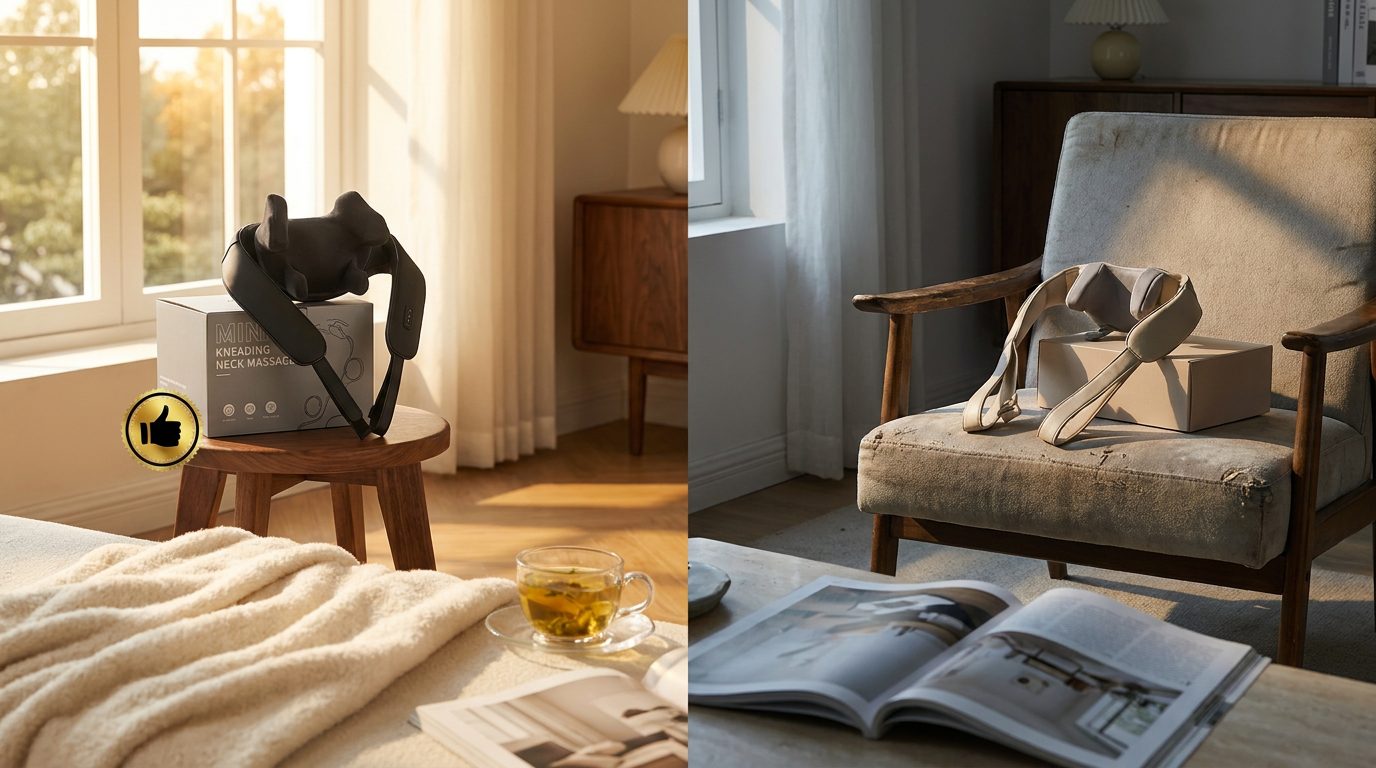
Evaluating the Shiatsu Cordless Neck Massager Standard
June 30, 2026 — Recent shifts in the recovery market show a heavy pivot toward the Cordless Neck Massager as a replacement for professional manual therapy. The conventional wisdom says that any device with rotating nodes and a heating element can replicate the specific pressure-point work of a licensed practitioner, yet the performance data suggests a massive variance in torque and battery efficiency.
While consumers often prioritize price, Homedics notes that their Quad Action Shiatsu Kneading Neck & Shoulder Massager with Heat retails for approximately $119.99, positioning it as a premium entry compared to budget-tier alternatives. These devices rely on mechanical nodes that simulate the Japanese 'shiatsu' technique, but the actual efficacy is tied directly to the motor's ability to maintain RPM under the weight of a human limb. Without sufficient power, the 'deep tissue' claim becomes a marketing abstraction rather than a physiological reality.
The Three-Point Mechanical Audit
When assessing a Shiatsu Cordless Neck Massager, the engineering must be scrutinized across three specific vectors: node geometry, thermal consistency, and torque retention. Most manufacturers, including Snailax, highlight portable and electric formats as the solution to chronic tension, but here's the part nobody talks about: battery degradation significantly impacts the heat output before it impacts the motor. A device might still spin at 80% charge, but the infrared or thermal elements often throttle down to preserve runtime, leading to an inconsistent therapeutic experience. For instance, the Etekcity EM-SN8S provides three distinct intensity levels, a necessary feature because a single-speed motor cannot account for the varying density of the trapezius versus the cervical spine. Run the math: if a massager is rated for a 15-minute auto-shutoff but loses 15% of its torque after the first ten minutes, the user isn't receiving a consistent deep-tissue treatment. This is why optimizing recovery with a rechargeable neck massager requires understanding how heat and mechanical pressure interact over a full cycle. Furthermore, the weight of the unit itself acts as the primary lever for pressure. If the straps are poorly positioned, the user must exert more effort to hold the device in place than the device exerts on the muscle, effectively neutralizing the relaxation benefits. Understanding what makes a cordless neck massager effective involves looking at the ergonomics of the pull-straps just as much as the internal motor specs.
Expert tip: To test the true power of a shiatsu motor, apply moderate downward pressure on the nodes during the first three minutes of operation; if you hear a significant pitch change in the motor, the torque is insufficient for actual deep-tissue work.
I’ll change my mind when manufacturers start publishing independent stall-torque ratings and standardized heat-up times in Celsius rather than using vague 'soothing' descriptors. Until then, the Cordless Neck Massager remains a tool that is only as good as its battery's ability to maintain peak voltage throughout a session. Users should focus on rechargeable neck massager with heat models that emphasize motor longevity over aesthetic gimmicks. A truly effective cordless neck massager must be able to withstand the physical resistance of a tense muscle without stalling.
Sources

Photo by Yan Krukau on Pexels
- Etekcity EM-SN8S Wireless Shiatsu Neck & Shoulder Massager
- Best Neck & Shoulder Massagers with Heat - Shiatsu Relief - Snailax
- Shop Neck Massagers & Shoulder Massagers - Homedics