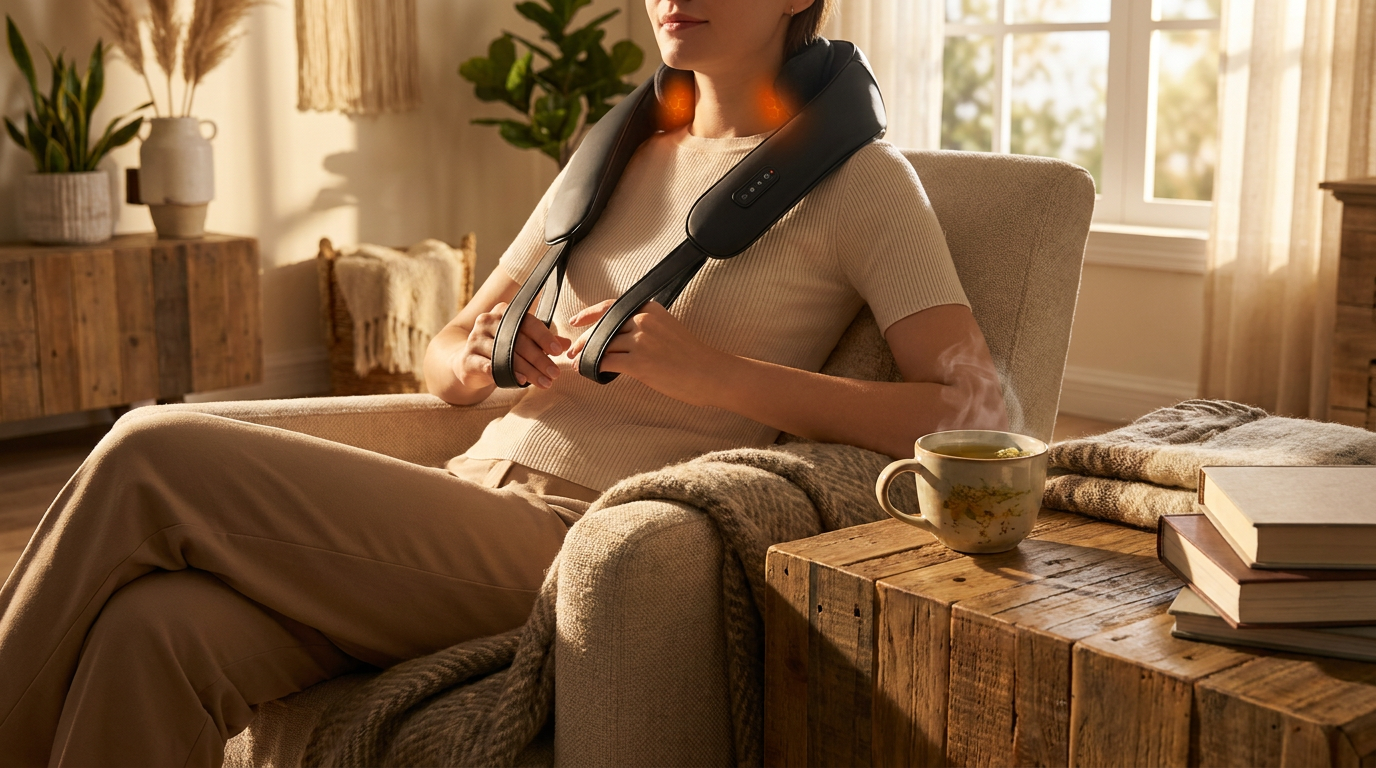
Cordless Neck Massager Performance and Battery Realities
May 22, 2026 — The market for portable recovery tools has shifted toward high-capacity lithium-ion integration, making the Cordless Neck Massager a central fixture for users seeking mobility without sacrificing torque. While the industry push focuses heavily on aesthetic slimness, the functional capability of these devices rests entirely on the discharge rate of their internal cells.
The conventional wisdom says that any portable device with a motor can provide a deep-tissue experience, but the physical reality of resistance often tells a different story. According to testing data shared by Health.com, even highly-regarded options like the Viktor Jurgen Back & Neck Massager emphasize that a consistent power supply is what actually defines the massage quality at an affordable price point. Many consumers assume that a rechargeable unit will inevitably lose intensity as the battery drains, yet modern motor controllers in the Cordless Neck Massager are designed to maintain a flat output curve until the final five percent of capacity. This prevents the sluggish, friction-heavy movement often found in older nickel-metal hydride alternatives.
The 4 Efficiency Benchmarks
Evaluating a rechargeable unit requires looking past the soft-touch exterior to the electrical specifications that dictate long-term utility. First, the charging interface must be considered; the transition to USB-C has standardized power delivery, allowing these massagers to draw current faster than legacy micro-USB ports. Run the math: a standard 2000mAh battery in a Cordless Neck Massager typically provides between 80 to 120 minutes of continuous operation depending on the heat setting usage. Here's the part nobody talks about: heat functions are the primary drain on battery life, often reducing total runtime by as much as 40% when engaged at maximum temperature. In video reviews of high-end hardware like the SKG HS500, users frequently highlight that while the shiatsu nodes are the main draw, the thermal regulation system is what determines if the device lasts a full week of sessions or requires daily tethering to a wall outlet. For a Cordless Neck Massager to be truly effective, the motor must maintain a consistent RPM even when the user applies significant downward pressure. If the motor stalls under 15 pounds of force, the device is essentially a vibrating pillow rather than a therapeutic tool. Most consumers overlook the stall force rating, but it is the single most important metric for deep-tissue relief.
Expert tip: To maximize the lifespan of your lithium-ion massager, avoid deep discharge cycles; recharging the unit when it hits 20% rather than letting it go completely dead will preserve the battery chemistry for significantly more cycles.
I’ll change my mind when solid-state batteries become the norm, but for now, the current generation of Cordless Neck Massager technology offers the best balance of weight-to-torque ratio available on the market. Understanding the limitations of current density ensures you select a tool that actually performs.
Sources

Photo by Yan Krukau on Pexels
- The 6 Best Neck Massagers of 2026, According to Our Tests
- What you need to know before you buy the Neck Massager ...
- Shiatsu + Heat + Wireless? SKG HS500 Neck Massager ...