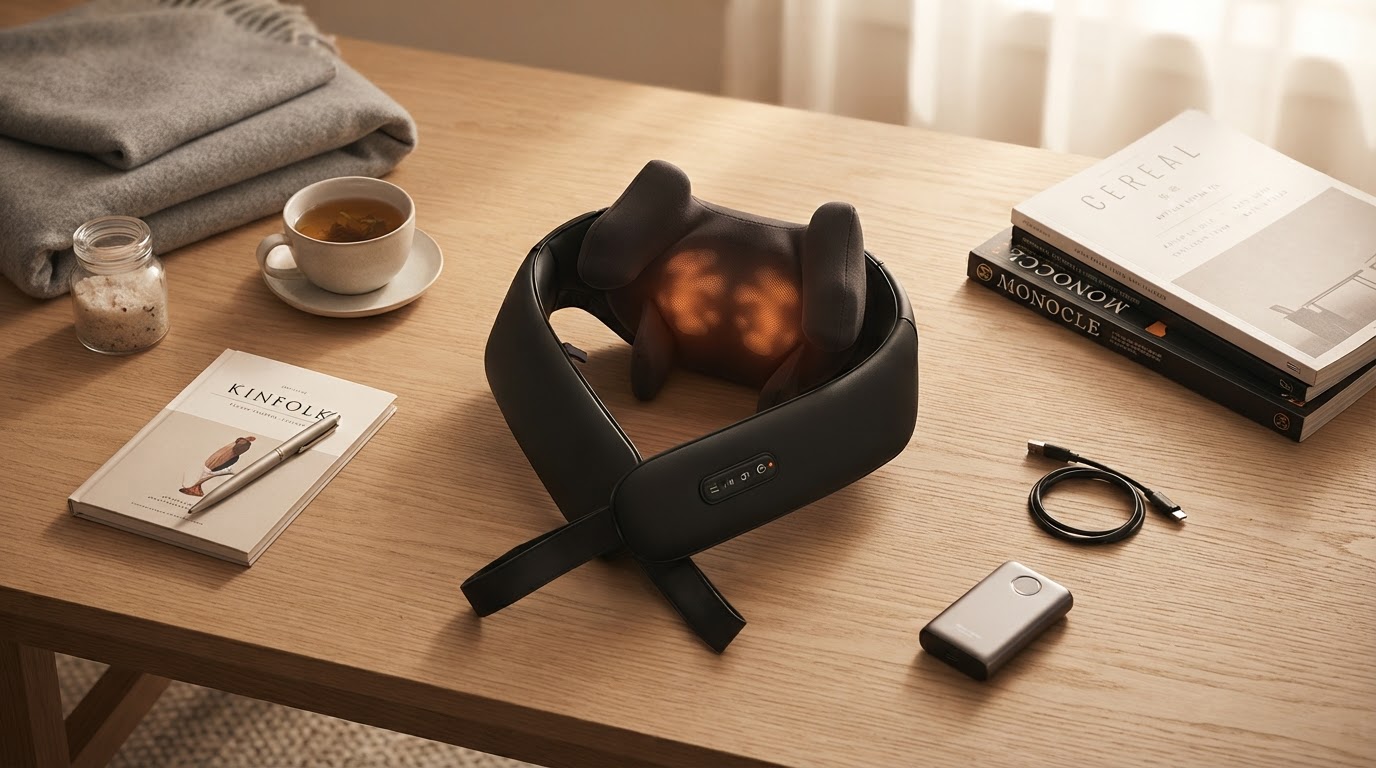
The 4-Point Shiatsu Cordless Neck Massager Evaluation
November 11, 2026 — The rise of high-torque lithium-ion batteries has shifted the Cordless Neck Massager from a novelty item to a legitimate recovery tool for chronic muscle tension. While the market is flooded with varying form factors, the integration of rotating shiatsu nodes into wireless designs remains the primary driver for consumers seeking clinical-style relief without the tether of a wall outlet.
The conventional wisdom says that any device with rotating nodes provides a deep tissue experience, but the reality is dictated by motor resistance and battery discharge rates. According to Snailax, modern shiatsu nodes are now engineered to mimic the thumb-kneading action of a professional therapist, often incorporating heat to improve blood flow during the cycle. However, the efficacy of these devices is frequently hampered by underpowered motors that stall when users apply the necessary pressure for true myofascial release. Understanding the mechanical limits of these portable units is essential for anyone attempting to manage tension outside of a clinic setting.
The 4-Point Mechanical Check
When evaluating a shiatsu Cordless Neck Massager, the most critical metric is the stall force of the motor, yet this is the part nobody talks about in the marketing copy. A true shiatsu experience requires the nodes to maintain their rotational speed even when the user pulls on the arm straps to deepen the pressure. In testing, cheaper units often seize under more than five pounds of direct force, rendering the deep tissue claim moot. Run the math: for a massager to be effective during travel or at a desk, it needs a battery capacity that supports both the mechanical rotation and the optional heat function for at least 60 to 80 minutes. Current market leaders like Homedics offer cordless shiatsu pillows that integrate heat, but users must balance the power draw; running the heat function simultaneously with high-intensity kneading can reduce battery longevity by up to 30% per cycle. Furthermore, the positioning of the nodes determines the coverage area. A standard four-node system is sufficient for the cervical spine, but for those targeting the upper trapezius, an eight-node configuration is required to prevent constant manual repositioning. The pivot to wireless neck massagers with heat has solved the mobility issue, but it has introduced a new variable: thermal consistency. Without a stable power source, the heat output can fluctuate, peaking early in the session and tapering off as the battery voltage drops. Users should prioritize units with regulated power delivery to ensure the last five minutes of the massage are as effective as the first.
Expert tip: To maximize the lifespan of your rechargeable deep tissue neck massager, avoid leaving the device on the charger once it reaches 100%. Overcharging lithium-ion cells in these high-draw devices can lead to heat degradation, eventually reducing the torque capacity of the shiatsu motors.
Achieving deep tissue neck massage at home requires more than just rotating nodes; it requires a rechargeable deep tissue neck massager that can withstand the physical load of human weight. I’ll change my mind when manufacturers start publishing verified stall-torque ratings alongside their battery life claims. Until then, users must rely on physical testing to ensure their rechargeable neck massager doesn't quit under pressure.
Sources
- Best Neck & Shoulder Massagers with Heat - Shiatsu Relief
- Shop Neck Massagers & Shoulder ...
- Snailax Cordless Shiatsu Neck and Shoulder Massager with Heat