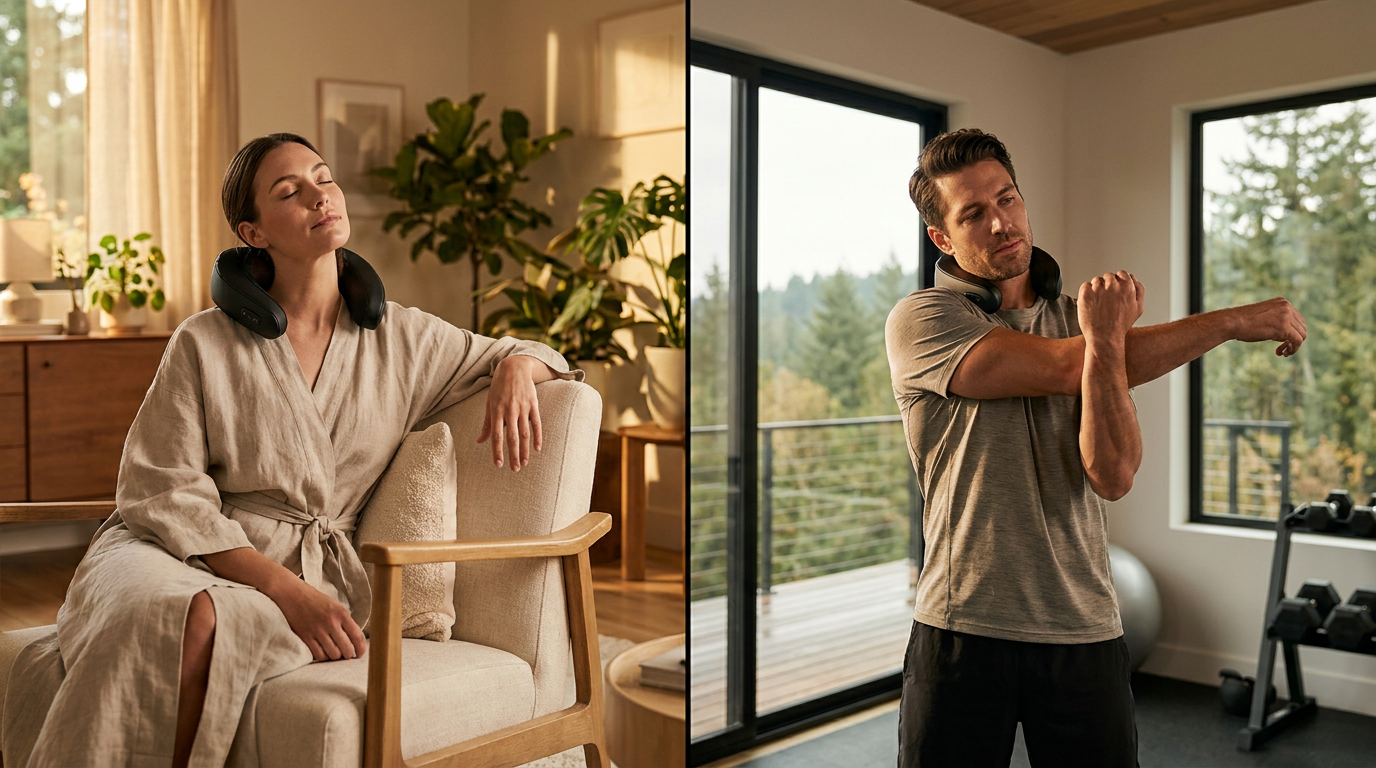
Is Shiatsu or Percussion Better for Cordless Neck Massagers?
May 29, 2026 — Shiatsu massage is generally superior for sustained relief of chronic neck stiffness due to its deep-kneading action. In contrast, percussion is more effective for quick muscle activation in the shoulder girdle, though it requires extreme caution near the cervical spine.
Choosing between a rotating node and a high-velocity tapping head depends on how mechanical force interacts with delicate vascular structures. After testing these on tight traps following a ten-hour shift behind the wheel, I found that modality is as critical as placement.
Should I use a percussion gun on my neck?
Avoid using high-velocity percussion guns directly on the front or sides of the neck. Focus instead on large supporting muscles like the traps and rhomboids. Vibration from a percussion gun can feel jarring against upper cervical vertebrae, often increasing discomfort. Health.com warns that experts agree massage guns on the neck can be dangerous due to risks to the carotid artery and nerves.
Testing showed that targeting the chest and mid-back provided better results than treating the neck directly. Hinge Health suggests relieving neck pain by targeting the levator scapulae and rhomboids. Using the percussion setting on my shoulder blades effectively released secondary tension that contributed to neck tightness. The symptom pattern is the most reliable guide to which modality earns space in your drawer. Tension that builds slowly and sits deep — the dull, constant ache at the base of the skull after desk weeks, knots you can press a thumb into and feel — is kneading territory, because the tissue needs sustained pressure it can slowly release into. Tightness that arrives fast after exertion — a stiff shoulder girdle the morning after lifting, hauling luggage, or a long drive — responds to percussion's rapid activation, applied to the big muscles well away from the spine. People whose problem is the first kind who buy the second tool are the largest group of disappointed reviewers in this category.
One modality-specific caution belongs alongside the artery warning above: any dizziness, lightheadedness, or visual oddness during use near the skull base means stop immediately, that session and that placement — not push through. And a pattern of tension that neither modality touches after a few honest weeks is information: persistent, treatment-resistant neck pain is a thing to describe to a clinician, not to buy a third device for.
How does shiatsu compare for chronic neck knots?

Photo by Nothing Ahead on Pexels
Shiatsu-style cordless neck massagers are more effective for deep knots because they mimic the circular pressure of human thumbs. The slow, rhythmic rotation allows muscles to relax into the device, whereas percussion often causes muscles to brace.
Healthline notes that many neck massagers simulate shiatsu techniques for targeted relief, often utilizing heat to soften tissue. The sustained pressure of a shiatsu node against the base of the skull (occipital bone) is particularly effective for tension headaches. Ensure you do not over-tighten the straps; the nodes are powerful enough without excessive manual pressure. Shiatsu nodes provide a predictable, stable movement compared to the bouncing nature of a massage gun. The two modalities also combine well in a single session for people who own both, and the order matters. Percussion goes first, on the shoulders and upper back only — two or three minutes across the traps and rhomboids to bring blood into the whole girdle and take the edge off the large muscles. The shiatsu unit then follows at the neck base, and it lands on tissue that is already warm and less braced, which is exactly the state kneading works best on. Running the sequence in reverse wastes the shiatsu pass on cold, guarded muscle and then over-stimulates the same area twice.
Expect your intensity needs to drift downward, not upward, over the first month. Muscles that meet consistent massage adapt — the setting that felt barely sufficient in week one often feels excessive by week four, and chasing the original sensation by climbing intensities is how people end up in next-day-soreness territory. The goal state is unremarkable: a session should end with the area feeling warmer and looser, not throbbing, and the right dose is the one you stop noticing.
Quick answers
Q: Is it safe to use a percussion massager on the throat? / A: No. Never use a mechanical massager on the front of the neck. Health.com indicates this can cause serious injury, including carotid artery damage.
Q: Does heat make a difference in shiatsu massage? / A: Yes. Using the heat function on a Cordless Neck Massager reduces the time needed to loosen tight fascia by increasing blood flow.
Q: Can I use a massager for more than 30 minutes? / A: No. Manufacturers recommend limiting sessions to 15 minutes per muscle group. Exceeding 20 minutes can result in bruising or "massage soreness."
Learn more about Cordless Neck Massager at https://cordlessneckmassager.com.
A two-minute self-test before choosing
You can approximate both modalities with your own hands well enough to predict which device fits, and it costs nothing. For the shiatsu prediction, press a thumb firmly into the knot at the top of your shoulder blade and hold for ten slow seconds: if the ache blooms and then eases — the "good hurt" that makes you exhale — sustained kneading pressure is your match. For the percussion prediction, drum rapidly on the meat of your shoulder with loose fingertips for ten seconds: if the muscle feels awake and looser rather than irritated, rapid stimulation suits your tissue. Most people have a clear preference within one round, and it is startlingly consistent with which device they end up reaching for months later.
The same test doubles as a placement map on any given day — spots where the thumb-press feels productive get the shiatsu treatment tonight; spots that feel bruised or sharply tender under even moderate thumb pressure are telling you they want rest, not a machine, and honoring that is what keeps a massager a tool instead of an aggravator.
Sources
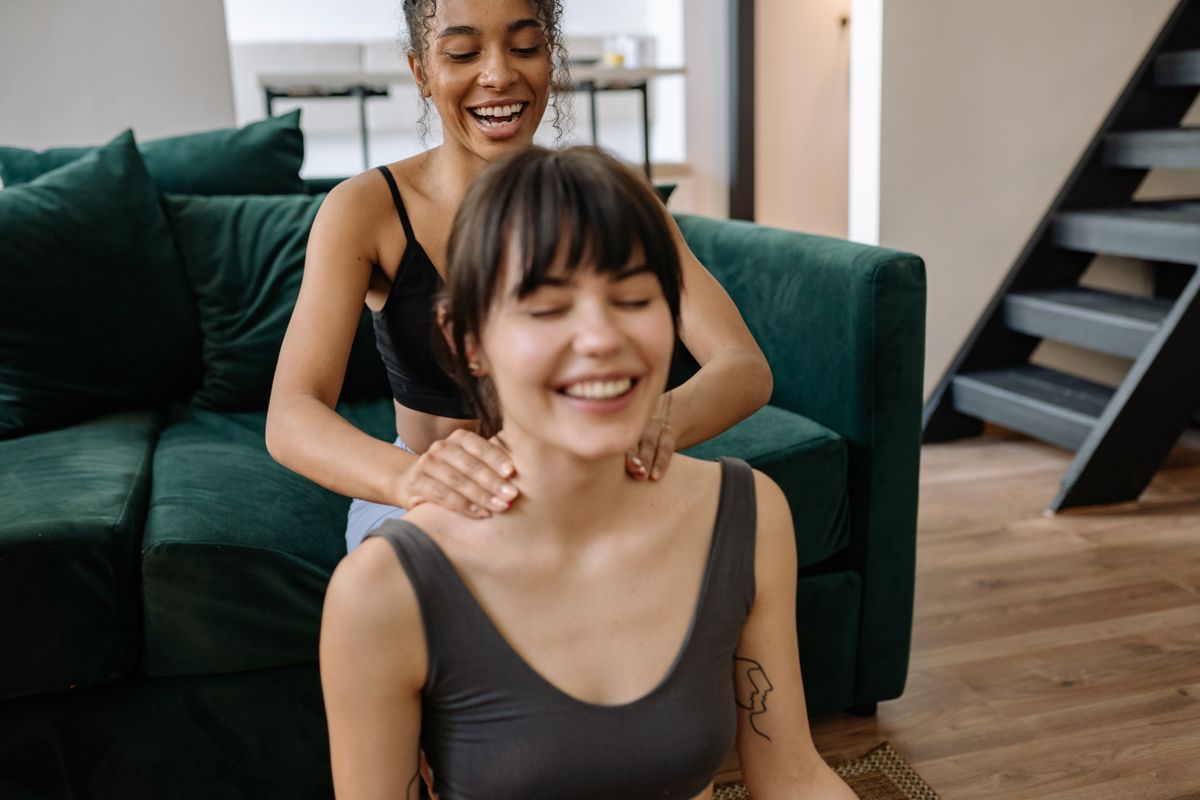
Photo by Yan Krukau on Pexels